June 25, 2026
Retail’s Next Competitive Edge: Turning Store Visits Into Brand Experiences

Tom Fishman
General Manager & Head of Marketing
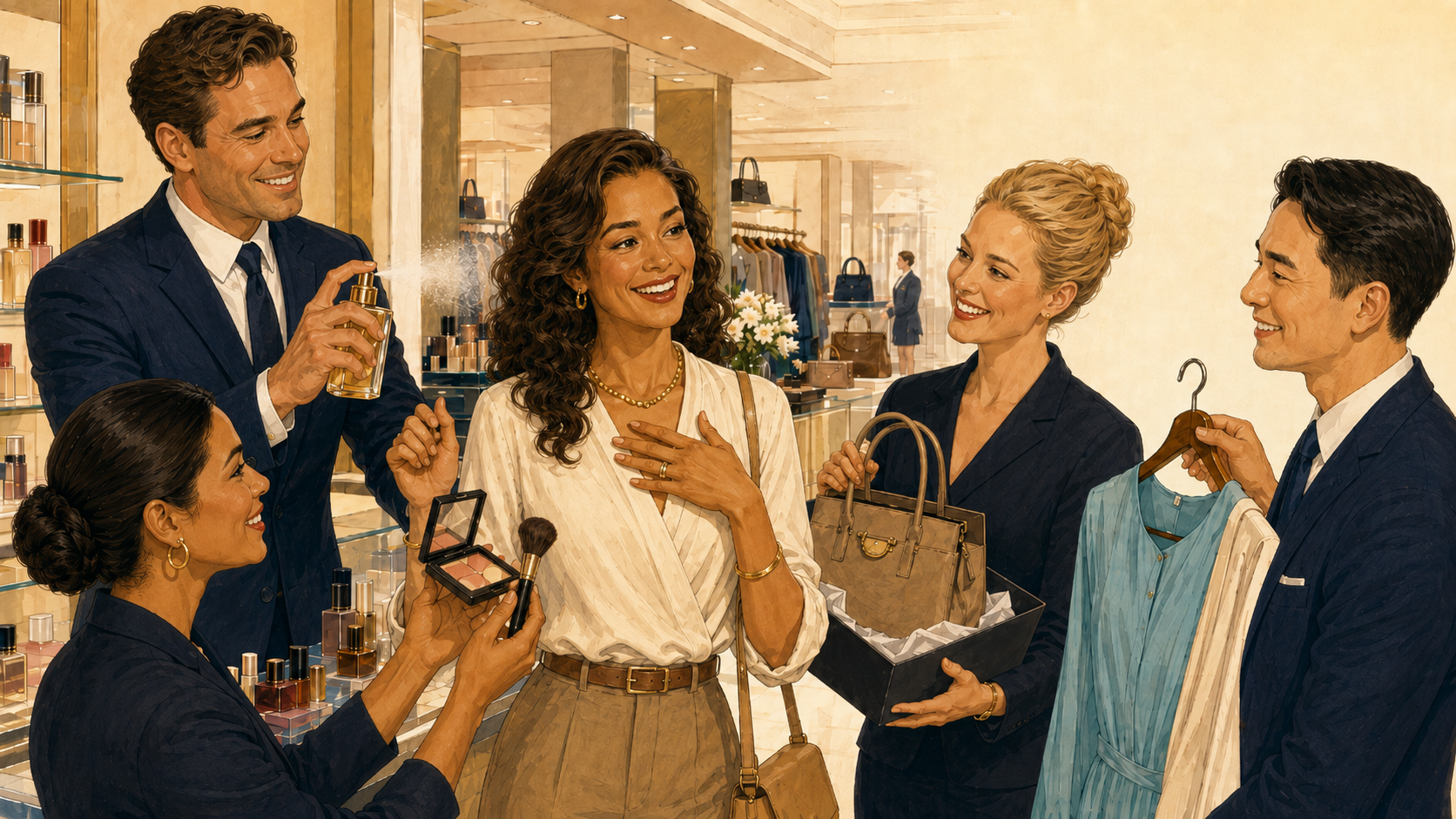
Walmart’s putting trained beauty advisers on the sales floor, and retail leaders should be paying attention.
According to the Associated Press, Walmart recently added beauty experts in select stores across Arkansas and Texas and plans to expand the concept to more than 400 U.S. stores by the end of 2026.
The question is: why? It’s not scalable. It’s not particularly efficient. And it doesn’t drive their famous “everyday low price” brand promise.
The move is part of a larger push to make physical stores more helpful, more interactive, and more service-driven. For a brand historically known for price and convenience, that is a meaningful signal for retailers of all shapes and sizes.
Walmart is not suddenly trying to become a luxury retailer. It is recognizing something every multi-location retail operator should be thinking about: stores can no longer function as simple transaction points. Customers can compare prices, read reviews, watch tutorials, and buy online without ever walking through your door. When they do visit, the store has to give them something that a digital visit alone cannot.
That “something” is an experience.
The Store Visit Is Now Part of the Brand Promise
Physical retail is shifting from product access to product confidence. Customers are not just asking, “Do you carry this?” They are asking, “Is this right for me?” “Can I trust this brand?” “Is this worth the price?” “Will someone help me make a better decision?”
That matters in all types of retail: apparel, luxury, electronics, home goods, furniture, sporting goods, gift stores, and specialty retail areas. It’s a sector where touch, feel, fit, explanation, recommendation, and confidence still matter.
For CustomerOptix clients, this shift is already playing out on the sales floor. Stephenie Hedges, Director of Retail at Shady Rays, explained how their retail teams create value beyond the transaction: “Our retail brand experts drive experience through customer engagement. They ask discovery questions, use the learnings to suggest products to try on, and demonstrate the differences so that shoppers clearly see the value and feel confident in their choices.”
That is the heart of experience-led retail, empowering sales associates to connect the customer’s need to the right product, build confidence, and make the brand feel more valuable in person than it does on a screen.
Personalization Is Great, But Consistency Is the Real Challenge
Retailers are heavily investing in personalization, AI, loyalty programs, and omnichannel experiences. Deloitte’s 2026 retail outlook found that many retail executives are focused on omnichannel experiences and loyalty, while 67% expect to have AI-driven personalization capabilities within the next year.
This is important progress for enterprise brands who can streamline personalization across massive mailing lists and consumer data sets, but for regional retailers with 1, 10, or 100 locations, personalization usually lives outside of an email campaign or app recommendation. It’s much more likely to show up at the counter, in the fitting room, on the sales floor, over the phone, and in the follow-up.
Another CustomerOptix client, Justin Baribault, Director of Retail Operations at MonkeySports, describes the importance of personal, hands-on retail engagement: “Our in-store representatives empower customers by creating hands-on, guided experiences that make products tangible, answer questions in real time, and build confidence through personalized engagement.”
Brands like MonkeySports have this nailed. The problem for brands underinvested in CX is that this kind of experience is easy to promise and hard to execute with consistency, which is what elevates it to part of the brand promise. One location may have a highly trained associate who asks great questions and demonstrates product value, while another may have an employee who points to an aisle and walks away. To management, this might look like a staffing issue, but to customers, it’s a reflection of your brand as a whole.
Poor Retail CX Has a Real Cost
PwC’s 2025 Customer Experience Survey found that 52% of consumers stopped using or buying from a brand because of a bad experience with its products or services, while 29% stopped because of poor customer experience either online or in person.
This is a wake up call for multi-location retailers. A singular weak store experience now risks more than just a singular sale. It now leads to lower repeat visits, weaker reviews, higher returns, lower trust, and more pressure to win customers back with discounts.
This is especially true for specialty and regional brands. You may not have Walmart’s scale, but you may have something just as valuable: closer customer relationships, more focused product expertise, and a clearer brand story. The advantage goes to retailers who can make that story real with all customer interactions at every location.
What Regional Retailers Should Do Now
Experience-led retail does not require a massive remodel or an enterprise budget. It starts with operational clarity.
- Define what a great, memorable customer interaction should look like.
- What questions should associates ask? What product knowledge should they demonstrate? What should happen when a customer is browsing, comparing, trying on, hesitating, or returning?
- Train for consultative service, not just task completion.
- Customers are often walking in with more information than ever. Associates need to be ready to add value beyond what the customer already found online.
- Measure consistency across locations.
- Regional leaders cannot rely only on sales numbers or manager reports. They need to know what customers actually experience when leadership is not in the building.
- Connect store feedback with online reputation and customer sentiment.
- A negative review, a low survey score, and a weak mystery shop result may all point to the same issue. Looking at each one separately leaves insight on the table.
The Best CX Programs Create a Fuller Picture
A full CX stack is especially valuable for retail brands that are successfully maintaining a consistent standard across locations, teams, and customer touchpoints. Jada Jennings, VP of Retail Operations at Currency Exchange International and a CustomerOptix client, explained how objective measurement helps support that standard:
“CXI empowers customers to experience our products by seamlessly connecting our online traffic with an authentic, customer-first atmosphere in our retail stores. Our partnership with an objective testing program keeps us accountable to this high standard, which we maintain from top to bottom as our part-time store employees grow into full-time management team members.”
For growing multi-location retailers, the next stage of brick-and-mortar competition will not be won by stores that simply stock products. It will be won by stores that help customers choose, feel confident, trust the brand, and come back for more.
Subscribe to the Buzz
Receive exclusive insights, tips, and customer experience strategies straight to your inbox.
.png)